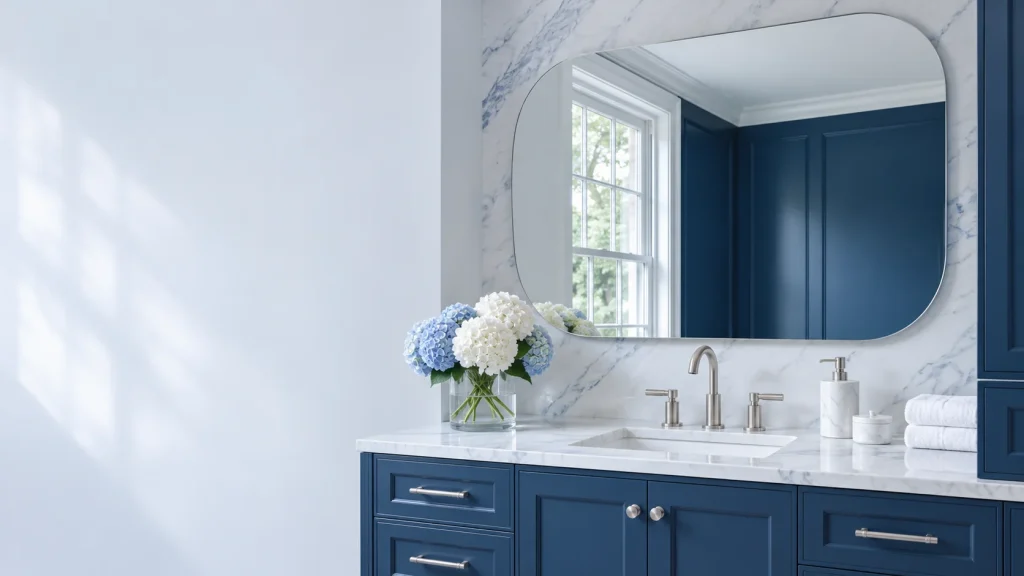
Architectural glass—whether a frameless shower enclosure, a staircase railing, or a custom vanity mirror—keeps its crisp, light-reflecting finish for decades when cared for with the right tools. Most clouding, micro-scratches, and corroded hardware don’t come from daily use; they come from abrasive pads, harsh ammonia or acid cleaners, and standing mineral water left to dry along seals and edges.
Follow this straightforward maintenance routine for Toronto and GTA homes:
- Squeegee after every shower: Fifteen seconds with a soft silicone blade prevents 90% of hard-water spots.
- Use pH-neutral cleaners: Mild, ammonia-free glass cleaners protect mirror backing, PVD hardware, and silicone seals.
- Never spray edges directly: Mist cleaner onto a microfibre cloth first—especially on bathroom mirrors.
- Skip metal scrapers and scouring pads: Even gentle-looking scrub sponges can leave permanent swirl marks on tempered glass.
1. Daily & Weekly Routine for Frameless Shower Glass
In Toronto and surrounding GTA municipalities, moderately hard tap water leaves calcium and magnesium deposits behind as droplets evaporate. Keeping a soft, all-silicone squeegee inside your frameless glass shower lets you clear standing water in seconds while the glass is still warm.
Once a week, wipe down the interior panels and clear polycarbonate sweeps with a damp microfibre cloth and a pH-neutral glass cleaner, then buff dry with a second lint-free cloth. Always keep any metal squeegee frames or rings away from tempered glass edges and stone curbs.
2. Safe Cleaners vs. Products That Damage Glass & Hardware
Different glass surfaces and hardware finishes react very differently to household chemicals. Use this quick reference before spraying any cleaner:
| Surface / Component | Safe to Use | Avoid Completely |
|---|---|---|
| Clear & Low-Iron Tempered Glass | Warm water, pH-neutral glass cleaner, soft microfibre cloths | Abrasive powders, scouring pads, razor blades, hydrofluoric/acidic descalers |
| Matte Black & Brushed Brass Hardware | Mild dish soap + warm water, damp microfibre cloth, dry buff | Bleach, vinegar soaks, ammonia, alcohol, or brass polishes |
| Silicone & Polycarbonate Seals | Diluted mild soap and soft nylon brush | Acetone, petroleum solvents, or harsh bathroom bleach sprays |
| Custom Silvered Mirrors | Ammonia-free cleaner misted lightly onto a microfibre cloth | Spraying directly on mirror edges, vinegar, or organic solvents |
3. Cleaning Interior & Exterior Glass Railings Without Streaks
For interior glass staircase railings, fingerprints and dust are the main culprits. Clean one panel at a time using two clean microfibre cloths—one lightly misted with ammonia-free cleaner and a dry cloth to buff away streaks before they air-dry.
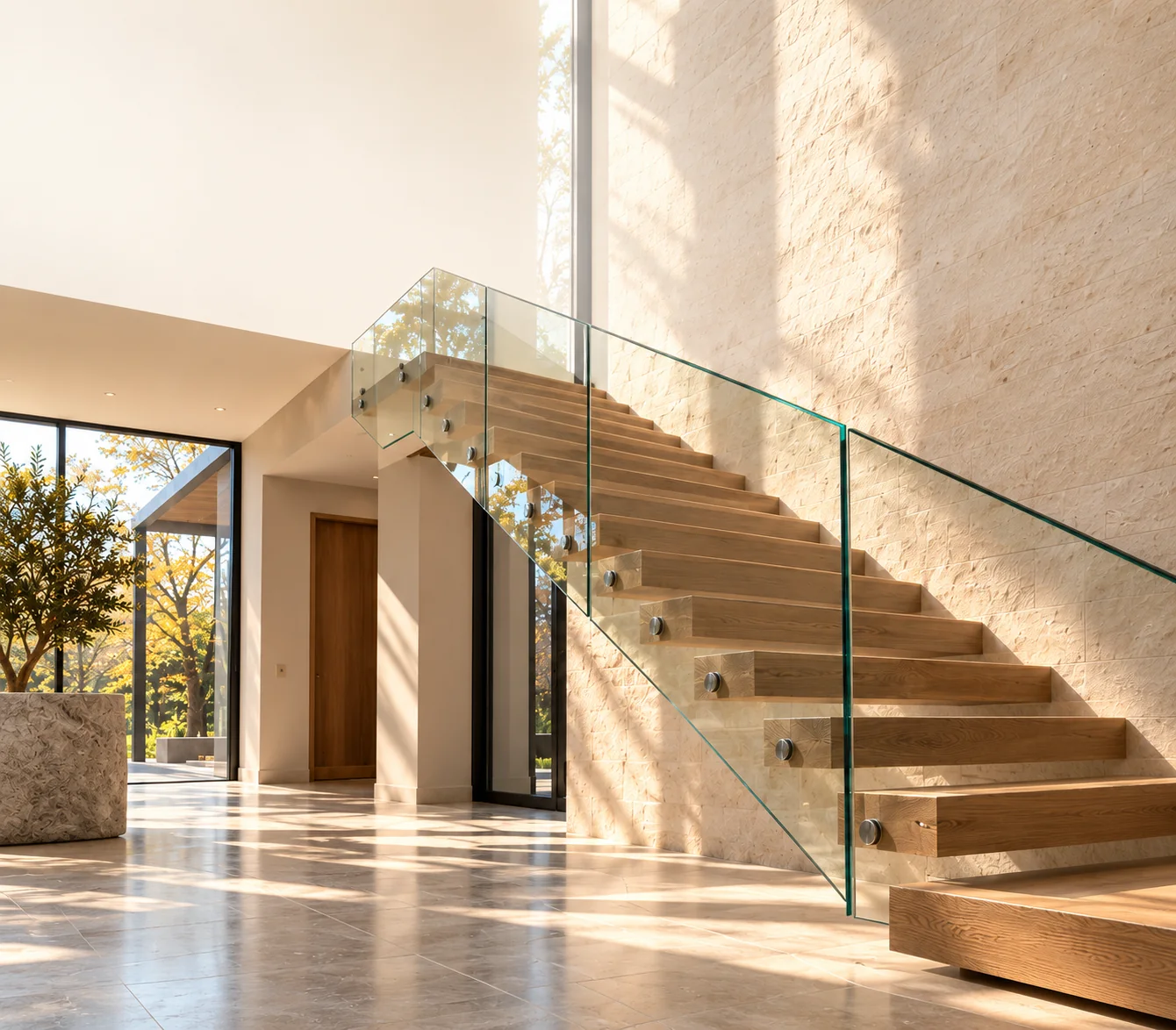
For exterior deck and terrace railings, always rinse away loose pollen, grit, and road dust with a garden hose before wiping so trapped particles don’t scratch the glass. Never lean over an elevated guard edge to reach the exterior face—use a telescoping soft-head applicator from a stable footing. For technical reference, see the National Glass Association’s architectural glass cleaning procedures.
4. Protecting Custom Bathroom Mirrors from Edge Desilvering (“Black Edge”)
The silvered reflective layer on the back of a mirror is sensitive to trapped moisture and alkaline or acidic chemicals. When liquid pools along the bottom channel or creeps behind exposed edges, it can slowly cause dark oxidation known as edge desilvering.
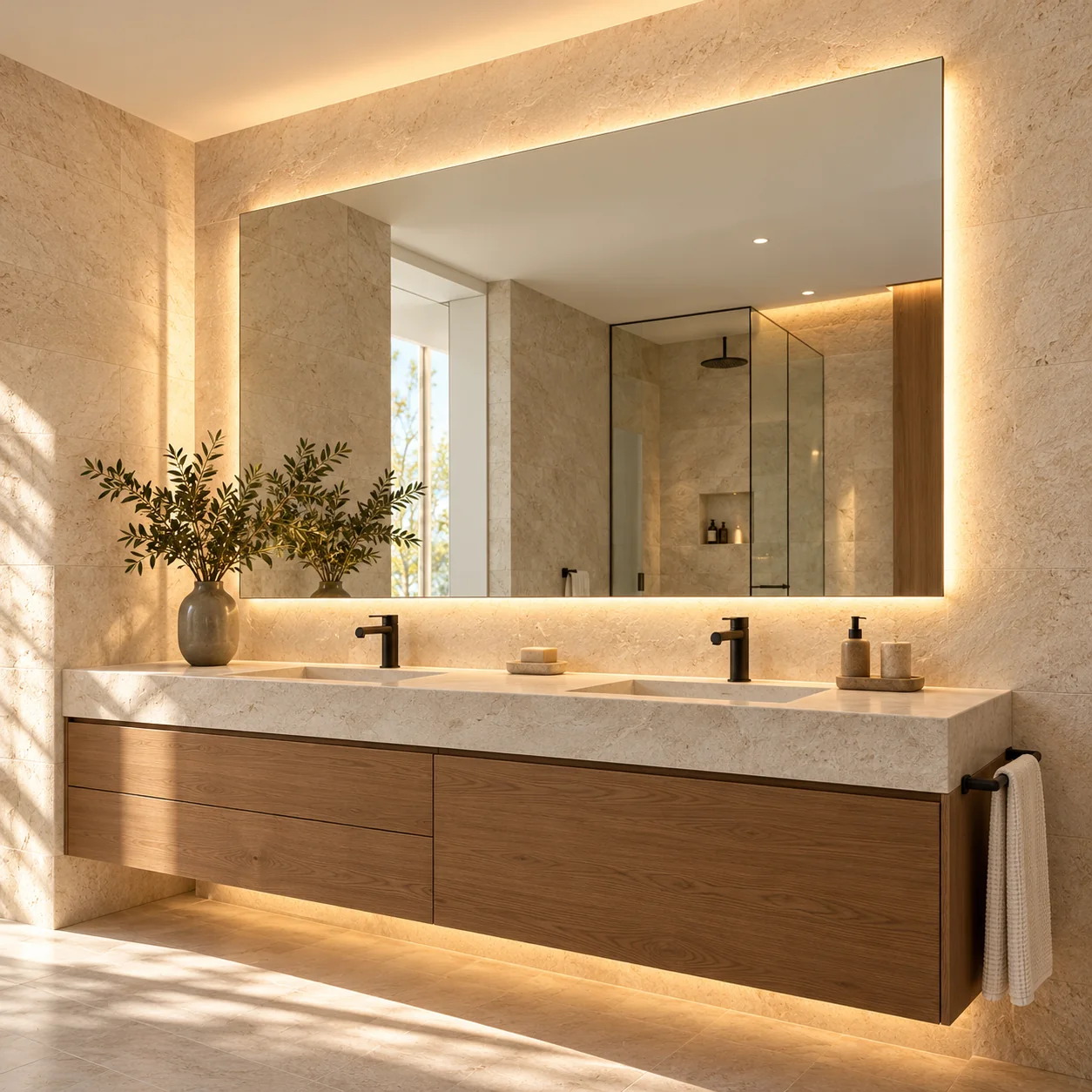
To keep custom bathroom mirrors pristine, always spray cleaner onto your cloth rather than the glass, run your bathroom exhaust fan during and after hot showers, and dry any water splashes along the bottom edge promptly. As Pilkington’s glass care guidance notes, organic solvents and harsh chemicals should be kept away from mirror backing.
Pro Tip for Stubborn Hard-Water Buildup: If mineral spots have already built up on uncoated shower glass, apply a 50/50 mix of distilled white vinegar and distilled water to a soft cloth, hold it against the glass for a few minutes, rinse thoroughly with clean water, and buff dry. Never let vinegar sit on matte black, brushed brass, or natural marble stone.
5. Glass & Mirror Care FAQs
Can I use Windex or ammonia cleaners on shower glass and mirrors?
Avoid ammonia-based sprays on mirrors (where they can attack the backing) and on matte black or brushed brass hardware (where they can dull protective finishes). A pH-neutral, ammonia-free glass cleaner is safer across all surfaces.
Are protective hydrophobic shower glass coatings worth it?
Yes—factory-applied or professional hydrophobic treatments fill microscopic pores in the glass so water beads off faster, reducing mineral etching and cutting weekly cleaning time.
What should I do if a shower seal discolours or hardware feels loose?
Clear polycarbonate sweeps and bottom vinyl seals are wear items that can be swapped out cleanly every few years. If a hinge or clamp ever feels loose, stop adjusting it yourself and contact a glazier so panel clearances stay aligned.
Planning a new glass project or replacing worn seals? Explore our project gallery or contact Toronto Golden Glass for expert advice.